In recent statements from Ledger, a major player in the hardware wallet space, the idea was expressed: "Self-custody is becoming the key to the next phase of the crypto industry." While exchanges and centralized services once served as the primary bridge between users and assets, there is a growing realization that holding private keys is not just an option but a fundamental principle of decentralization. In this article, we explore why self-custody is making waves, how Ledger and other hardware solutions are shaping a new paradigm of security and trust in blockchain, and what to consider to keep your tokens safe.

A few years ago, storing crypto on centralized exchanges (CEX) was considered a convenient choice: fewer worries, everything under one "roof." However, a series of high-profile hacks, bankruptcies, and account freezes (recall exchanges that became insolvent) curbed enthusiasm for centralized platforms. People began to rethink one of the core tenets of cryptocurrency: "Not your keys, not your coins," reminding everyone that without private keys, users risk losing all their assets in the event of a failure.
Thus, by 2023–2024, the demand for hardware and software wallets that provide full ownership of private keys began to grow, paving the way for a new cycle of interest in crypto and DeFi.
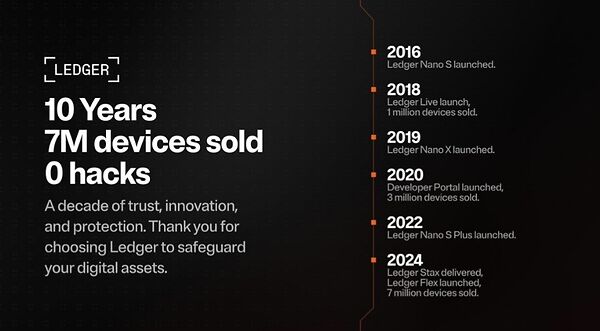
Ledger, as one of the leading manufacturers of hardware wallets, actively promotes the idea that crypto assets are safest when stored on an offline device. The company’s leadership is built on several key factors:
According to Ledger’s executives, "Self-custody is not a retrograde trend but a driving force that gives users control and fosters confidence in long-term crypto ownership."
As more investors adopt self-custody, the dynamics within the crypto industry evolve:
In the long run, if self-custody culture takes hold, it will strengthen the resilience and security of the entire blockchain ecosystem, though it may negatively impact the trading volume centralized exchanges control.
Despite its clear benefits, self-custody requires a degree of technical literacy and caution. Common issues include:
Thus, choosing to "take control" does not guarantee security; users need awareness and good practices to avoid falling victim to social engineering.
The phrase "Next crypto adoption cycle" is often mentioned in the context of institutional capital inflows. However, the retail segment is also evolving, with DeFi, NFTs, and blockchain gaming users seeking full ownership of their assets. This pushes developers to create more user-friendly and secure solutions:
If these advancements successfully merge CeFi’s ease of use with self-custody’s security, mass adoption could reach new heights.
If you want to follow Ledger’s advice and switch to self-custody, consider the following:
This approach helps users safely adopt self-custody without risking assets due to technical errors or fraud.
The statement that "self-custody is driving the next wave of crypto adoption" reflects a growing understanding of the importance of controlling one's private keys. Comments from Ledger executives and other industry leaders confirm that in the post-FTX era, users are more cautious about centralized services. Hardware wallets, multisignature solutions, and decentralized authentication are forming the foundation of long-term trust in the industry.
While custodial solutions remain comfortable for some (who prefer not to manage seed phrases and security), a mature self-custody ecosystem paves the way for true decentralization. If developers, designers, and marketers can make hardware wallets and smart software applications even more user-friendly, we may soon witness not just thousands but millions of new users who choose to keep their private keys "in their own hands" rather than trusting third parties.