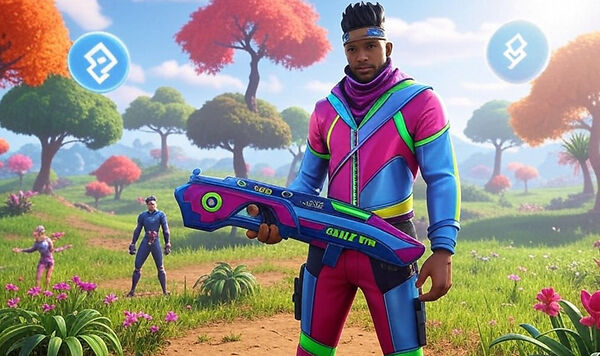
The world of blockchain games continues to evolve rapidly, creating projects that are capable of surpassing the traditional boundaries of gameplay. One of the latest trends is the integration of Web3 technologies into the role-playing game genre, raising the question: could a new Web3-RPG project replicate Fortnite's success and become its cryptographic counterpart?

Unlike traditional online games, Web3-RPGs use decentralized technologies such as blockchain, NFTs, and smart contracts to create a more resilient and transparent in-game economy. This means that players own digital objects (weapons, skins, characters, land parcels) not just within the game but "for real," with unique tokens confirming ownership rights.
This approach allows players to manage their accumulated assets: sell them on open markets, trade, or use them in other projects. Players are not dependent on the whims of the publisher, as ownership rights to items are recorded on the blockchain, ensuring transparency and immutability of data.
Fortnite has become a symbol of mass appeal, cross-platform play, and continuous content updates. In the new Web3-RPG, developers are striving to incorporate some ideas from Fortnite:
The key difference is that now the control over in-game items will rest in the hands of the players, not just the publishers or developers.
The fundamental idea of Web3-RPG is to create a sustainable in-game economy. Items created or mined by players can be refined, improved, or even used as collateral for cryptocurrency loans. This fundamentally changes the paradigm of interacting with in-game resources:
While the idea of a "crypto-Fortnite" sounds appealing, there are several obstacles:
If developers can overcome these challenges, the potential for growth is enormous. If successful, Web3-RPG could attract a mass audience from both the gaming world and the crypto space.
Some projects already demonstrate that the combination of blockchain and gameplay works. For example, Axie Infinity became one of the first games to gain mass appeal, showing that playing and earning simultaneously is possible. Other projects like Illuvium and The Sandbox continue to push the boundaries of the gaming experience, combining RPG elements, metaverses, and NFT economies.
The idea of "crypto-Fortnite" suggests that the new game could become a cultural phenomenon, going beyond the narrow circle of enthusiasts and capturing the imagination of millions of players around the world.
The new Web3-RPG aims to combine the gaming experience of Fortnite with the advantages of decentralized technologies. Players will fully own their assets, freely trade them, and participate in the development of projects. While the industry faces technical and regulatory challenges, the prospects are impressive.
If the concept works, we will witness the formation of a new generation of games where cryptocurrencies and NFTs become not just a gameplay element but a key factor in the development of decentralized gaming worlds. In this case, "crypto-Fortnite" may not just be a dream, but a reality.