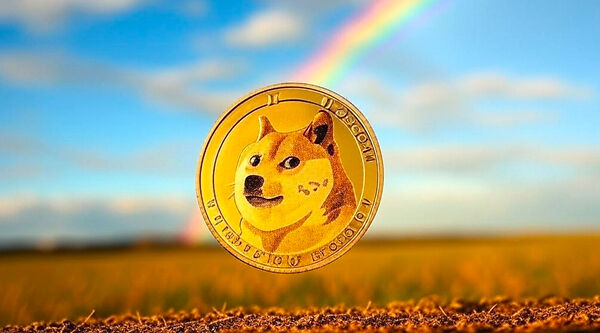
In recent years, Dogecoin (DOGE) has experienced several impressive ups and downs, transforming from a "meme token" into one of the most talked-about altcoins in the market. Today, many analysts continue to look for signals to determine the future price movement of DOGE. One of these tools is fractal analysis, which suggests that under a positive "bullish" market scenario, the price of Dogecoin could reach a "conservative" mark of $2.35. In this article, we will examine the basis of this forecast, the additional factors that might influence DOGE's price, and the risks investors should consider.

Fractal analysis assumes that the market develops according to recurring patterns ("fractals") that have occurred in the past and are repeating in the current price dynamics. Dogecoin has its own characteristic cycles, where the price sharply spiked due to "meme hype" and public statements from famous personalities (especially Elon Musk), followed by quick corrections. Supporters of the fractal approach argue:
According to current observations, if Dogecoin replicates the movement similar to the past bullish cycle, the "conservative" target of $2.35 could be an intermediate or even final stage of the rally.
Many ask: where did the number $2.35 come from? Analysts usually use several factors to highlight this level:
Of course, all of this is just a model, and the actual price could differ — and might even exceed this level if the bullish sentiment in the market is supported by fundamental factors.
Unlike many altcoins, Dogecoin has significant "social capital." The humorous and memorable image of the Shiba Inu dog, the active community, and the support of Elon Musk, who has repeatedly promoted DOGE, all contribute to the token's sustained interest. However, there are also more fundamental factors:
Additionally, the market anticipates potential integration of DOGE into social platforms (such as Twitter/X), and some large players speculate that Dogecoin could become a "popular" medium for micro-payments on the internet.
As with any "bullish" model, the $2.35 forecast has its "Achilles' heels":
Investors planning to wait for "DOGE's victory above $2.35" should carefully assess these factors and remember risk management principles — set stop-losses, diversify portfolios, and analyze the fundamental market situation.
If we look at the history of Dogecoin, we can spot several surges that seemed sudden, but in reality, they aligned with a logic of mass influxes of new money into the market. Among DOGE's "booms," the following stand out:
Analysts studying fractals believe that a new wave of hype, coinciding with network improvements and a global bullish sentiment, could repeat a similar scenario by 2025. However, there are, of course, no "ironclad guarantees."
For those who decided to include DOGE in their crypto portfolio, here are some practical recommendations:
Fractal analysis is just one approach to forecasting, and the actual situation may diverge from the "bullish" scenario. Possible outcomes include:
In such conditions, investors should have a backup plan and clearly define exit points in case the situation does not unfold as expected.
The idea that the price of Dogecoin could reach the "conservative" level of $2.35 by 2025 is based on fractal analysis, which demonstrates certain market movement patterns. DOGE has surprised skeptics with sudden price jumps before, gaining support from well-known industry figures and its loud "meme brand." However, any investment in such a volatile asset requires a careful approach and a deep analysis of fundamental, technical, and psychological factors.
While Dogecoin fans see the "dog token" as a symbol of freedom and the crypto community's friendliness, traders and institutional investors view it as a potential opportunity for speculative profit. Can DOGE really settle above $2? It depends on whether hopes for integration into everyday payments come true, if significant technological improvements emerge, and if the community's enthusiasm is sustained. Ultimately, Dogecoin's success will be determined by a combination of innovation, promotion strategies, and favorable market conditions.