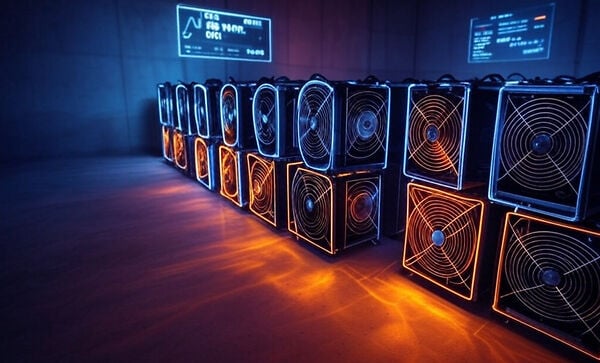
How to Mine Bitcoin: A Complete Guide for Beginners in 2025
Bitcoin mining has evolved from a hobby for enthusiasts to a highly competitive industry with a turnover of $15 billion. Yet even today, beginners can earn income if they approach the process strategically. This guide explains where to start, how to choose equipment, and how to avoid common pitfalls.
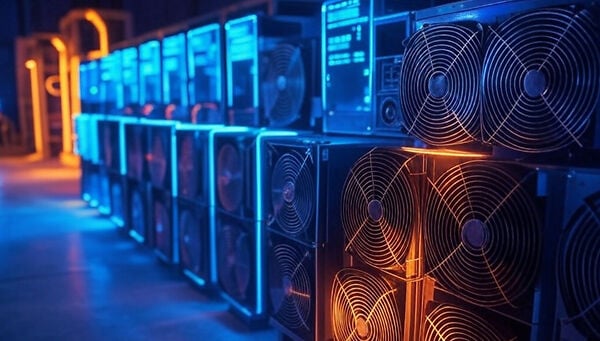
1. The Basics of Mining: How Does It Work?
Bitcoin mining is the process of verifying transactions and adding blocks to the blockchain by solving complex mathematical problems. The block reward is 3.125 BTC (approximately $180,000) plus transaction fees. Key concepts include:
- Hashrate: The network's computational power (currently 600 EH/s).
- Difficulty: Automatically adjusted every 2016 blocks (roughly every 2 weeks).
- Energy Efficiency: ASIC miners typically consume about 25 Joules per TH.
2. Choosing Equipment: ASIC vs. GPU vs. Cloud Mining
| Type |
Example |
Hashrate |
Price |
Profitability |
| ASIC |
Bitmain Antminer S21 |
200 TH/s |
$4,000 |
High |
| GPU |
NVIDIA RTX 4090 |
1.2 GH/s |
$1,800 |
Low |
| Cloud Mining |
Genesis Mining |
Varies by contract |
From $500 |
Medium |
Tip: In 2025, ASIC miners remain the only viable option for profitable Bitcoin mining.
3. Top 5 ASIC Miners for Bitcoin in 2025
- Bitmain Antminer S21 Hyd (335 TH/s, 20.8 Joules/TH).
- MicroBT Whatsminer M63S (390 TH/s, 22.7 Joules/TH).
- Canaan Avalon A1466 (170 TH/s, 23 Joules/TH).
With an electricity rate of $0.07 per kWh, the Antminer S21 offers an ROI of about 14 months.
4. Setting Up Your Mining Operation: Software, Pools, and Wallets
4.1. Choosing Mining Software
- Braiins OS+ – Optimized for ASIC miners.
- CGMiner – A cross-platform solution.
4.2. Connecting to a Mining Pool
- Register with a mining pool (e.g., Foundry USA Pool, AntPool).
- Set up your worker by entering your wallet address and a password.
- Start your miner with the pool's parameters.
4.3. Wallet for Payouts
- Hardware Wallets: Ledger, Trezor.
- Desktop Wallets: Electrum, Exodus.
5. Calculating Profitability: Formulas and Tools
Main parameters include:
- Income = (Your hashrate / Network hashrate) * Block reward * Bitcoin price.
- Expenses = Energy consumption (in kWh) * Electricity rate * 24 * 30.
Useful tools: WhatToMine, ASICminerValue.
6. Potential Issues and Risks: What Could Go Wrong?
- Increasing Difficulty: Block rewards may decline by 5–15% each month.
- Equipment Failure: ASIC miners operate at 75–85°C, which poses a risk of overheating.
- Legal Restrictions: Mining regulations apply in the EU and in certain US states.
7. Alternatives: When Mining Isn’t Profitable
- Cloud Mining: Renting mining power without owning equipment (beware of scams).
- Staking: Earning on PoS coins like Ethereum or Cardano.
- Trading: Buying Bitcoin during market corrections.
Conclusion
Bitcoin mining in 2025 is a business for those willing to invest $5,000 or more and keep abreast of market trends. Choose energy-efficient ASICs, join reliable mining pools, and calculate your ROI carefully before investing. As Michael Saylor once said, “Bitcoin is the only reliable safe haven in the digital storm.”